
REVIEW · FORT LAUDERDALE
Fort Lauderdale Riverwalk Self-guided Audio Walking Tour
Book on Viator →Operated by Tripvia Tours · Bookable on Viator
Fort Lauderdale’s riverwalk tells stories on foot. This self-guided audio tour strings together the Arts and Entertainment District and the North Riverwalk with live GPS prompts at each stop. I like that you can go slow, pause for photos, and skip ahead when you feel like it, but one real consideration is figuring out the start point and parking near 600 W Las Olas Blvd.
Two things I especially like: first, the narration is built for wandering, not rushing, with automated playback when you reach each location. Second, the stops mix big-name landmarks (like the Broward Center) with smaller, surprising details you’d likely miss on your own.
One drawback to plan around: a few elements along the route can feel a bit dated or changed since installation, so treat the audio as a framework and stay flexible if something looks different in person.
In This Review
- Key things to know before you go
- How the Fort Lauderdale Riverwalk self-guided audio tour really works
- Price and value: $10.99 for an unhurried 90–120 minutes
- Starting at 600 W Las Olas Blvd: your route and pacing tips
- Broward Center, the Arts district, and that first stretch along the water
- Discovery & Science, the New River name, and the historic-building thread
- New River Inn, plus the haunted King-Cromartie House
- Philemon Nathaniel Bryan House and the Hoch Heritage Center
- PATH rail, Thrive sculpture, and the “walk through it” art moment
- Historic Downtowner, the Maxwell Room vibe, and a satellite museum campus
- New River Yacht Club apartments, Go Riverwalk bricks, and Rio Vista
- Stranahan House to Las Olas: finishing strong and extending your afternoon
- Should you book this Fort Lauderdale Riverwalk audio tour?
- FAQ
- Do I need cell service during the tour?
- How long is the tour?
- What does the $10.99 price include?
- Where does the tour start and end?
- Do I need headphones?
- What language is the audio?
- Is this a private tour?
Key things to know before you go
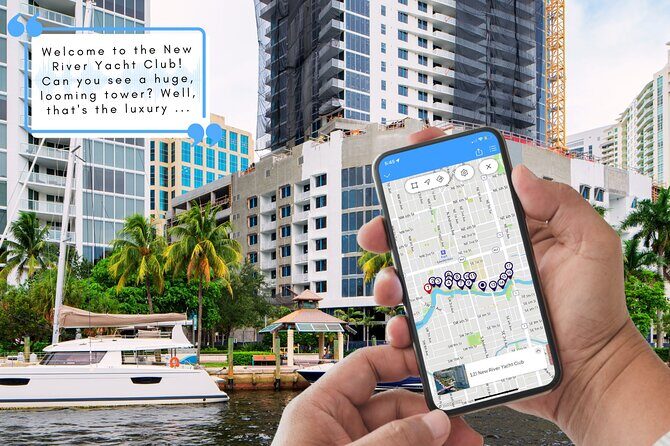
- Live GPS map + automatic stop playback means less fiddling and more walking
- Works offline once downloaded (no signal/data needed during the tour)
- No time pressure you control the pace and where you stop
- History meets modern Fort Lauderdale from haunted house lore to big public art
- Audio plays from your phone speaker headphones are optional, but you’ll want quieter moments
How the Fort Lauderdale Riverwalk self-guided audio tour really works

This is a self-guided experience on your phone, designed around one main idea: you walk the riverfront and the audio cues you as you reach each point of interest. You’ll get a mobile ticket, and you download everything in advance while you’re on Wi‑Fi. After that, the tour is set up so you don’t need mobile signal or data while you’re walking.
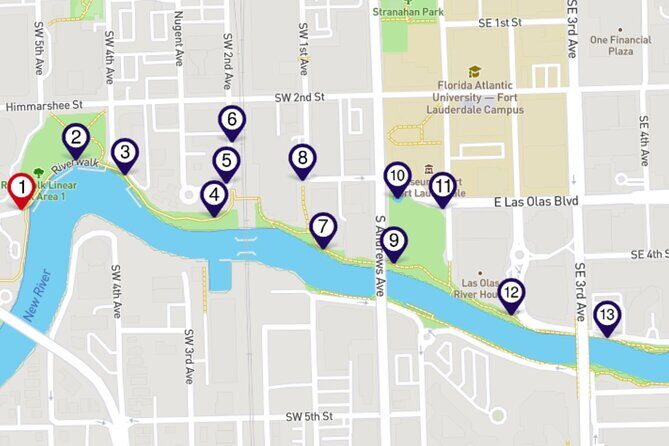
You don’t need to keep tapping menus every few minutes. The tour guide commentary is set to automatically play at each point of interest, and the GPS shows your route and where you are. That matters on a flat, stop-and-go walk like the Fort Lauderdale Riverwalk, because you’re spending your attention on the water, not your phone screen.
A practical note: your headphones aren’t included. Audio can play from your device speaker too, which is convenient, but it also means you’ll hear more outside noise. If you’re the type who enjoys clean narration (and you don’t want to broadcast it to everyone nearby), bring basic headphones.
This is also a private experience. Only your group participates, which usually makes the timing feel calmer since you’re not coordinating with other people. Most travelers can participate, and service animals are allowed.
Other walking tours we've reviewed in Fort Lauderdale



Price and value: $10.99 for an unhurried 90–120 minutes
At $10.99 per person, this is priced like an affordable add-on to your day rather than a full guided tour. For that money, you’re paying for structure and context: the tour points you toward landmarks, gives you background, and keeps you from doing the guess-and-check work of figuring out what each building or sculpture actually is.
Here’s what you’re not paying for: attraction tickets. The route includes places you might want to enter—especially the Museum of Discovery & Science—but entry is not included. So the true “value” depends on how you use the tour. If you mainly want a scenic, story-driven walk, it delivers. If you want to add museum time or tours inside buildings, budget extra.
Timing is flexible: the tour is set for about 1 hour 30 minutes to 2 hours, but it’s meant to be flexible. If you linger at one stop (or do a loop for views), you can. That kind of loose pacing is exactly what I look for on a riverwalk day, because the best moments often happen off the “must-see” list.
Starting at 600 W Las Olas Blvd: your route and pacing tips
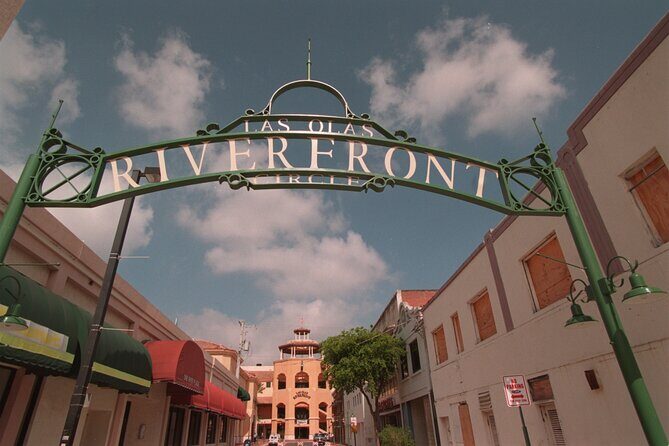
The tour starts at 600 W Las Olas Blvd, Fort Lauderdale, FL 33312, and it ends just past the historic Stranahan House at E Las Olas Boulevard (near the area shown by the map pin for the endpoint).
This is where I’d be slightly cautious: the start point is clearly stated, but in real life, parking and nearby streets can make the opening minutes feel confusing. If you want your first ten minutes to feel smooth, do this before you arrive:
- Put the start address into your navigation app and park with a short walk in mind.
- Open the tour so you know you’re in the right location before you start moving.
The good news is that the experience is designed for you to keep going at your pace. You can take detours, stop anywhere, and let the audio catch up at the next point when you’re ready.
Also pay attention to timing of your day. The tour runs all day (listed hours are essentially 12:00 AM to 11:30 PM daily). That means you can fit it into a morning stroll, an afternoon break, or a late-evening wander when the waterfront cools down.
Broward Center, the Arts district, and that first stretch along the water

Early on, the tour pulls you through downtown Fort Lauderdale’s Arts and Entertainment District. One of the first anchor stops is the Broward Center, which has been entertaining visitors since 1991 and is credited with energizing the downtown area.
Why this is a good early stop: it sets the tone of the walk. Fort Lauderdale isn’t just a beach town. This part of the city leans into performances, galleries, and events—and the audio gives you context so the buildings don’t feel random.
From there, you head toward the waterfront promenade described like an esplanade—a long, open, level area made for strolling. That word matters on this walk. The design of the route supports an easy rhythm: you can look at the water, move when you’re ready, and stop without feeling like you’re off schedule.
A practical thing to expect: if you’re walking in the heat, that first stretch is where you’ll appreciate the flat, continuous vibe. If you’re tired, it’s also where you’ll feel the walk is forgiving enough to shorten.
Discovery & Science, the New River name, and the historic-building thread

After you’re warmed up, the tour shifts into places that connect Fort Lauderdale’s present to its past.
One stop is the Museum of Discovery & Science, described as feeling more like a hands-on theme-park experience than a strict “quiet museum.” The audio framing here is useful: it helps you decide whether you want to enter later or just use the museum building as part of your scenery loop. Remember, tickets aren’t included.
Then the narration turns to the New River itself—specifically, how the New River got its name. Small detail, big impact. When you understand the name and story behind a place, the whole riverwalk reads differently. Suddenly you’re not just walking beside water; you’re tracing a cultural thread.
From there you move into the area covered by History Fort Lauderdale, which is said to hold the largest collection of historic buildings in the county. The audio highlights a few notable structures, which helps you focus on the right facades and not just walk by them.
Other guided tours in Fort Lauderdale





New River Inn, plus the haunted King-Cromartie House
The New River Inn is described as a building designed to resemble a southern plantation and built to withstand hurricanes. That kind of “designed for storms” detail is more than trivia. It tells you how Fort Lauderdale thinks about its weather and its architecture.
Next is the King-Cromartie House, reputed to be one of the most haunted houses in Fort Lauderdale, and the audio gives you the reasoning behind the reputation. If you like ghost stories, this stop is fun. If you don’t, you can still treat it as a history stop: the folklore is the hook, but the building context gives the walk some personality.
Philemon Nathaniel Bryan House and the Hoch Heritage Center
The Philemon Nathaniel Bryan House is included for its history—again, a stop that’s designed to make you slow down and look at what you’re seeing.
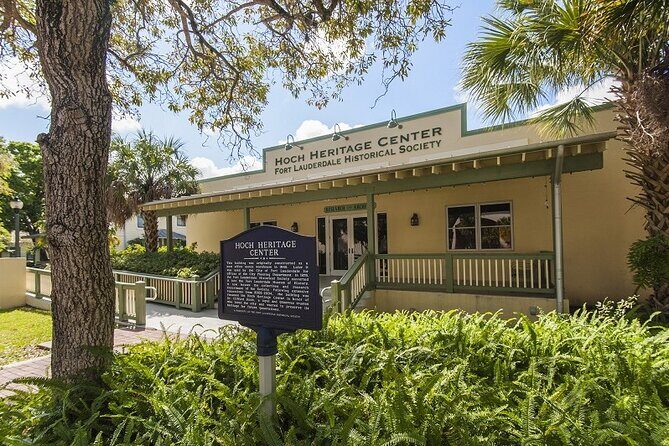
A little later, the tour heads to the Hoch Heritage Center, which used to be a warehouse for the post office. Now it’s described as a key player in local and state history, and it holds one of the most important collections of historical records in Florida. This is one of the stops where the audio context helps you understand why the building matters, even if you don’t go inside.
PATH rail, Thrive sculpture, and the “walk through it” art moment
A standout mid-tour stop is a monument displaying a PATH rail segment unearthed from the World Trade Center wreckage. The audio focuses on why that segment is significant—so you’re not just reading a plaque, you’re learning what the object represents.
Then you hit THRIVE SCULPTURE, described as over 30 feet tall and made from glass-fiber reinforced concrete, weighing around 14 ton. The reason I think this works on a self-guided tour is simple: it’s hard to ignore, and it’s interactive.
The narration points out that the sculpture includes a fern-adorned archway that you can walk through. That makes it feel like more than a photo stop. It’s a little pause in the middle of your walk where you get to do something with your body, not just your camera.
If you’re traveling with anyone who gets bored by “standing and reading,” this is a place you can look forward to.
Historic Downtowner, the Maxwell Room vibe, and a satellite museum campus

The audio takes you toward The Historic Downtowner, tied to the charisma of the roaring 1920s. It also spotlights a room called the Maxwell Room, described as especially nostalgic. The tour’s angle here is helpful: rather than treating the building as a landmark-only stop, it gives you a mental picture of the atmosphere from a different era.
From there, you’ll notice a distinctive building with colorful murals and a large set of features: 25,000 square feet of exhibition space, a sculpture terrace, an auditorium store, and a café. The audio doesn’t assume you know it, and it sets up what’s inside as worth your attention.
There’s also an important twist in the narration: this is a satellite campus, and the main campus is located in Boca Raton. The audio teases that something about it is pretty unique, but the core value for you on this walk is that you’ll understand why this building isn’t just “another stop”—it’s part of a larger arts network.
If you want to turn your walk into a half-day, this is where you might decide to add time at that campus (since ticketed entry isn’t included).
New River Yacht Club apartments, Go Riverwalk bricks, and Rio Vista
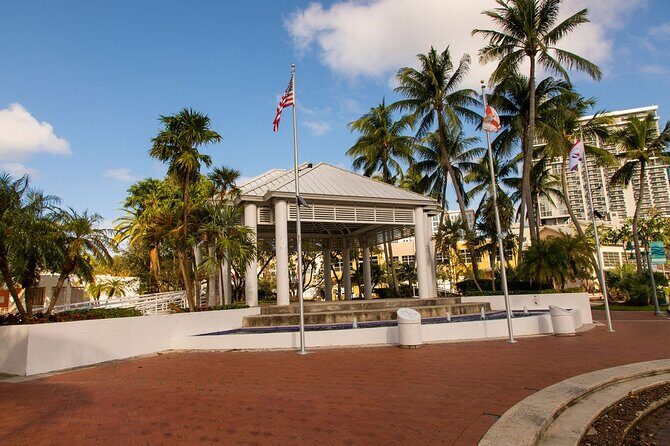
The tour also includes modern riverfront development, which keeps the walk from feeling frozen in time.
One stop is New River Yacht Club Luxury Apartments, with commentary about how the design team got creative. It’s an easy read-on-the-move stop, because you can look at the shapes, materials, and siting as you listen.
Then the narration turns to the commemorative bricks and colorful banners along the riverwalk. These are tied to fundraising for Go Riverwalk, described as a program active for over 30 years. This kind of stop is valuable because it gives you a reason to notice details most people skip. Suddenly you’re looking at the names and messages, not just walking past decorations.
The audio also includes a playful stop about a park that is named after something—specifically described with humor about not being full of actual cigarette smokers or middle-aged men. You’ll hear what it’s named after during the walk, and it’s one of those moments that makes the narration feel more like local storytelling than formal lecturing.
On the south side of the river, you’re pointed toward Rio Vista, described as one of the best places to live in all of Florida. That’s not a small claim, and the audio treatment helps you notice how the neighborhood and riverfront feel connected.
Stranahan House to Las Olas: finishing strong and extending your afternoon
The tour’s endgame is anchored by Historic Stranahan House Museum, described as Fort Lauderdale’s oldest and most historically significant surviving structure—the place where it all began, at least in the story the city tells about itself.
After that, you’ll come across a Plaza named to honor Ward, a dedicated Floridian known for community involvement and accomplishments. This is a good closing set of stops because it shifts back from architecture and artifacts to people and civic life.
Then the audio gives you a “continue from here” suggestion that I like a lot: if you follow the boulevard all the way to the end—about 2 miles from here—you’ll reach Las Olas Beach. Even if you don’t walk the full distance, it’s a useful mental map of what’s next.
You’ll also hear about Las Olas Boulevard as Fort Lauderdale’s premier strip for shopping, dining, events, galleries, and things to do. The audio frames it as part of the big Arts-and-Entertainment identity, not just a tourist shopping street.
Finally, there’s a stop honoring Wayne Huizenga, described as an upstanding Fort Lauderdale entrepreneur who contributed much to the city’s growth. The ending portion ties it together again: downtown, the New River, and the Arts scene all braided into one walking day.
Should you book this Fort Lauderdale Riverwalk audio tour?
I’d book it if you want:
- A budget-friendly way to make the waterfront walk feel guided without buying tickets everywhere
- A 90–120 minute self-paced stroll that mixes modern landmarks with history
- A route that’s naturally scenic and built for pausing often
I’d hesitate if:
- You hate audio narration (there’s a fair chance you’ll find the tone a bit too sweet or “cheesy” for your taste)
- You need flawless precision on the first start minutes and you’re worried about figuring out parking near the beginning
If you do book, go in with one mindset: use the audio as your compass, not your prison. Fort Lauderdale changes fast, and the best riverwalk moments often come from taking your time, stepping off the planned pace for a photo, and letting the city lead the last few blocks.
FAQ
Do I need cell service during the tour?
No. You download on Wi‑Fi before you start, and the tour is set up so it works without needing signal or data while you walk.
How long is the tour?
Plan for about 1 hour 30 minutes to 2 hours depending on how often you stop and how much you detour.
What does the $10.99 price include?
It includes the mobile ticket, the self-guided audio narration, and a live GPS map with stop-by-stop playback. Attraction tickets are not included.
Where does the tour start and end?
It starts at 600 W Las Olas Blvd, Fort Lauderdale and ends just past the historic Stranahan House at E Las Olas Boulevard.
Do I need headphones?
Headphones aren’t included. The audio can play from your phone’s speaker, but headphones are optional if you want quieter listening.
What language is the audio?
The tour is offered in English.
Is this a private tour?
Yes. It’s listed as a private activity, so only your group participates.
You Might Also Enjoy


More Walking Tours in Fort Lauderdale

More Tours in Fort Lauderdale






More Tour Reviews in Fort Lauderdale
- Jungle Queen Riverboat 90-Minute Narrated Sightseeing Cruise in Fort Lauderdale
★ 4.5 · 1,753 reviews